




Have you ever seen IBM enterprise servers displayed in a museum? When people think about museums in Jakarta, they often picture Indonesia’s rich cultural heritage, colonial architecture, or national history. However, tucked away in the heart of Jakarta’s Old Town (Kota Tua) is a museum that deserves a place on every IBM i professional’s bucket list—Museum Mandiri.
As someone who has spent years working with IBM Power Systems and IBM i environments, visiting Museum Mandiri was a unique experience. I have visited many museums in different countries when I’m traveling, but this is the first museum I have encountered that proudly displays actual IBM enterprise servers as part of its permanent exhibition. Rather than simply showcasing old computers, the museum tells the fascinating story of how one of Southeast Asia’s largest banks evolved its core banking systems using IBM technology over several decades.
For IBM Power, IBM i, and enterprise computing enthusiasts, this museum is much more than a banking museum—it is a living timeline of enterprise IT evolution.
Table of Contents
A Brief History of Museum Mandiri
According to wikipedia and other resources, Museum Mandiri occupies the former headquarters of Nederlandsch Indische Handelsbank (NIHB), a Dutch trading bank established during the colonial era. The magnificent Art Deco building was completed in 1929 and later became part of Bank Mandiri after Indonesia’s banking restructuring.

Following extensive restoration work, the building was transformed into Museum Mandiri and opened to the public to preserve the history of Indonesian banking, particularly the formation and technological evolution of Bank Mandiri.

Today, visitors can explore:
- Historical banking documents
- Antique safes and vaults
- Currency collections
- Traditional banking equipment
- Customer service facilities from different eras
- Banking technology spanning several decades
- Legacy enterprise computer systems


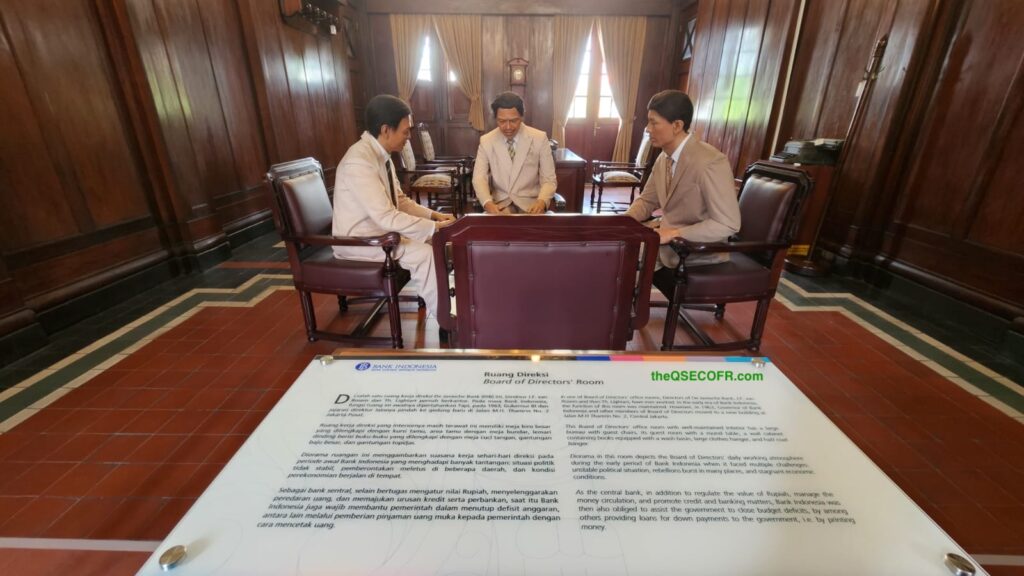
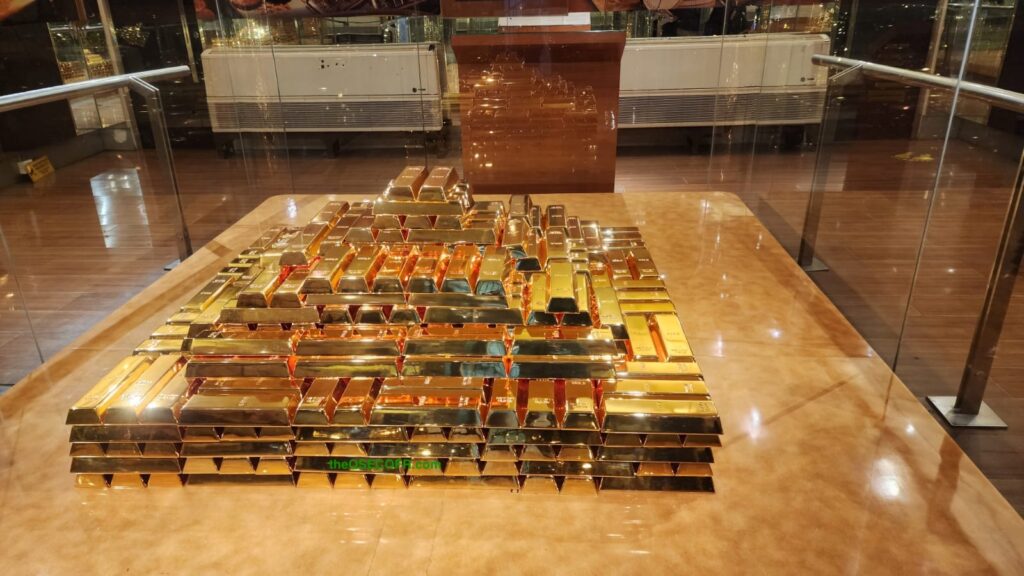
Unlike many financial museums that focus only on economics or currency, Museum Mandiri also documents the technological journey behind one of Indonesia’s largest financial institutions. The museum is digitized, allowing you to read and explore more about history and items by scanning QR codes.
Why IBM Professionals Should Visit
For IBM professionals, especially those working with IBM i, AS/400, Power Systems, or enterprise infrastructure, Museum Mandiri offers something truly special.
Most museums display early personal computers such as Apple, Commodore, or IBM PCs.
Museum Mandiri is different.
It showcases the actual enterprise platforms that powered one of Indonesia’s largest banking institutions.
Walking through the exhibits feels like reading the history of IBM Power Systems through real production environments rather than textbooks.
Seeing these systems preserved reminds us that enterprise computing is rarely glamorous, yet it quietly powers millions of financial transactions every day.
The Evolution of Bank Mandiri’s Core Banking Systems
| BEST (Bank Exim Integrated System) | When Bank Mandiri was established in 1998 through the merger of four state-owned banks, it inherited nine separate core banking systems. Maintaining multiple systems created operational complexity, making integration a strategic priority. The bank selected the BEST (Bank Exim Integrated System) platform as the common operational system for all branches during the early integration period. BEST became the foundation upon which the newly merged bank unified its nationwide operations. |
| MASTER (Mandiri Integrated System) | In 2000, Bank Mandiri introduced MASTER (Mandiri Integrated System). MASTER represented the next phase of integration by consolidating the IT systems inherited from the four legacy banks. This integration covered four major areas: Core retail banking General ledger and reporting ATM services Trade finance Treasury operations To support nationwide deployment, Bank Mandiri established MASTER training centres in six Indonesian cities, ensuring staff across the country could effectively operate the new system. MASTER laid the technological foundation for the next major transformation. |
eMAS (Enterprise Mandiri Advance System) | The most significant milestone arrived in 2003 with the implementation of eMAS (Enterprise Mandiri Advance System). Launched on 17 August 2003, eMAS formed the centrepiece of Bank Mandiri’s 2001–2003 IT Strategic Plan. Its objectives included: Modernising banking delivery channels Supporting multichannel banking Building a modern Data Warehouse Improving management information systems Strengthening infrastructure Supporting risk management and regulatory compliance The project was internationally recognised when eMAS received the 2004 MIS Asia Innovation Award in the IT Governance category. Even today, eMAS continues to operate after multiple hardware upgrades, demonstrating the longevity and reliability of IBM enterprise platforms. |
IBM Systems Featured in the Museum
One of the most fascinating parts of the museum is seeing how Bank Mandiri’s banking platform evolved across several generations of IBM hardware.
IBM AS/400 Model 740 (2002–2008)
During the transformation from MASTER to eMAS, Bank Mandiri relied on the IBM AS/400 Model 740.

The platform supported:
- Nationwide branch operations
- International branch connectivity
- ATM services
- Credit card processing
- Trade services
- Mandiri SMS Banking
- Early data warehouse implementations


For many IBM i professionals, the AS/400 represents one of the most reliable enterprise systems ever built, and seeing one preserved in a museum is genuinely exciting.
IBM System i5 595 (2008–2014)
As transaction volumes increased, Bank Mandiri upgraded to the powerful IBM System i5 – Model 595 (Machine Type 9406-595).

This platform provided:
- Increased processing capacity
- Higher scalability
- Improved availability
- Enhanced support for enterprise banking workloads


The upgrade ensured eMAS could continue supporting Indonesia’s rapidly growing banking sector.
IBM Power7 (2014–2020)
The next major upgrade brought Bank Mandiri onto IBM Power7 technology.

The museum highlights several impressive capabilities of this platform:
- IBM Power7 symmetric multiprocessing architecture
- Multi-chip processor design
- Embedded DRAM cache
- Simultaneous multithreading
- IBM i operating environment
- Centralised nationwide banking system


The eMAS system running on IBM Power7 supported:
- More than 1,900 transactions per second
- All domestic branches
- Overseas branches
- ATM networks
- Debit cards
- Credit cards
- Internet Banking
- Mobile Banking (Mandiri Online)
- Trade Services
These figures illustrate the scale of enterprise computing required to support one of Indonesia’s largest financial institutions.
More Than IBM
Although IBM systems are undoubtedly the highlight for IBM enthusiasts, Museum Mandiri also preserves technology from several other enterprise vendors.
Visitors can see legacy systems and equipment from companies including:
- Datacard card personalization systems
- De La Rue banking and security equipment
- Legacy banking terminals
- Historical ATM technologies
- Banking communication equipment
- Mechanical accounting machines
- Other enterprise hardware used throughout Bank Mandiri’s history

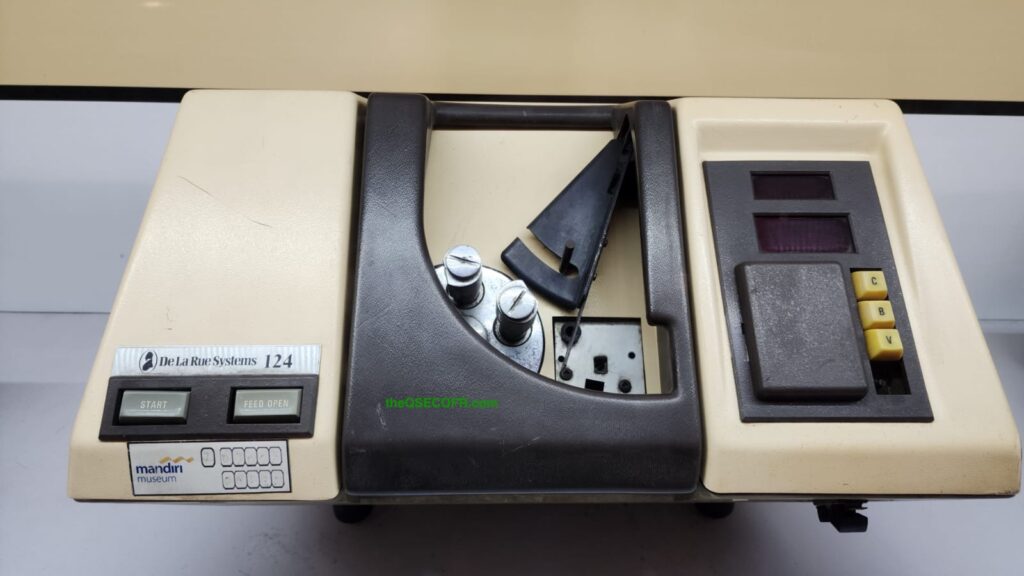

This broader collection provides an excellent perspective on how enterprise banking technology evolved over several decades.
A Personal Reflection
One aspect that impressed me most was how openly the museum celebrates enterprise technology.
Most organisations retire old systems quietly once new platforms are installed.
Here, however, Bank Mandiri has chosen to preserve them as part of its national banking heritage.
I honestly cannot recall visiting another museum anywhere in the world that permanently exhibits IBM enterprise servers in this way. It allows anyone—not just IT professionals—to appreciate the technology that processed millions of financial transactions behind the scenes. Visitors can learn about Indonesia’s banking history while standing in front of the very IBM systems that powered it. Alongside IBM hardware, the museum also showcases legacy technologies from vendors such as Datacard, De La Rue, and others, making it a fascinating destination for anyone interested in the evolution of enterprise banking infrastructure.
For those of us who have spent years managing IBM i partitions, Power Systems, HMCs, backups, HA clusters, and production workloads, these machines are more than retired servers—they are milestones in the history of enterprise computing.
Planning Your Visit
Location
Museum Mandiri is located in Jakarta Old Town (Kota Tua), directly opposite Jakarta Kota Railway Station, making it easy to reach by train or taxi.
https://maps.app.goo.gl/KevmYk2aqpvmNf7LA
Getting There from Soekarno–Hatta International Airport (CGK)
There are several convenient options:
Airport Rail Link + Commuter Line
- Take the Airport Rail Link from CGK to BNI City Station.
- Transfer to the KRL Commuter Line toward Jakarta Kota Station.
- Exit at Jakarta Kota Station.
- The museum is directly across the street (approximately a 2–3 minute walk).
Taxi or Ride-hailing (Gold/Silver Bird or Grab/Gojek)
- Travel time: around 35–60 minutes, depending on traffic.
- This is the easiest option if you have luggage or are traveling in a group.
Opening Hours
Typical opening hours are:
- Tuesday to Sunday
- 09:00 AM – 03:00 PM
- Closed on Mondays and certain public holidays
It’s worth checking the museum’s official channels before visiting, as schedules may change.
Ticket Prices
The museum is known for being very affordable:
- Adults: approximately IDR 5,000
- Children/Students: lower admission rates may apply
- Foreign visitors: generally the same pricing, though this can change over time.
Bonus Tip
If you are interested in exploring the history of banking in Indonesia, the Museum Bank Indonesia is a must-visit. Located next to the Museum Mandiri, this specialized educational museum in Jakarta’s Old Town (Kota Tua) offers a comprehensive glimpse into the historical evolution of Indonesia’s financial system and central banking.
The museum showcases the development of Indonesia’s financial system through modern multimedia displays, interactive technology, and an extensive numismatic collection that spans from pre-colonial times to the present day.
Final Thoughts
Museum Mandiri is much more than a banking museum. It tells the story of how technology enabled one of Indonesia’s largest financial institutions to evolve from a complex merger of four banks into a modern, nationwide banking network.
For IBM Power and IBM i professionals, it offers a rare opportunity to stand face-to-face with systems that once handled thousands of financial transactions every second. Few places in the world preserve enterprise hardware in such an accessible way, making Museum Mandiri a unique destination for anyone passionate about enterprise computing, banking technology, and the enduring legacy of IBM Power Systems.
Whether you’re an IBM architect, IBM i administrator, infrastructure engineer, or simply curious about how large-scale banking systems have evolved, Museum Mandiri is a place well worth adding to your itinerary when visiting Jakarta.


